
Whitestone & College Point Flood Exposure · NYC DEP Separate Storm Sewer Area
Whitestone & College Point, Queens - MS4 Area
Properties here drain through separate storm sewers: rain runs in its own pipes straight to the East River and Long Island Sound, apart from the sewage. When a storm drops rain faster than the catch basins can take it in, the water collects on streets and low lots instead. Here’s what that looks like for Whitestone & College Point, Queens specifically.
4,510 properties in Whitestone & College Point, Queens drain through separate storm sewers to the East River and Long Island Sound. Flood Form rates 25% of them Moderate or High for stormwater, 16% for sewer backup, 15% for groundwater, and 10% for coastal flooding. 93% of lots have yard area that legally qualifies for on-site infiltration. The ground slopes gently down toward the west, from about 62 ft to 17 ft, so runoff from higher blocks drains toward lower ones. The median building dates to 1955. 5% of parcels sit over a historic stream or pond. Their runoff reaches the water through 20 NYC DEP storm sewer outfalls. NYC DEP lists floatables as a pollutant of concern in these waters under its MS4 stormwater permit.
See where your property stands
Free. Takes about 60 seconds.
Flood exposure in Whitestone & College Point (East River & Long Island Sound)
The share of properties Flood Form rates Moderate or High for each type of flooding, on the same Minimal to High scale as an individual report.
25%
Stormwater exposure: Moderate or High
16%
Sewer Backup exposure: Moderate or High
15%
Groundwater exposure: Moderate or High
10%
Coastal exposure: Moderate or High
What sets Whitestone & College Point (East River & Long Island Sound) apart
The three figures on which this area differs most from the rest of NYC’s separate storm sewer areas.
37 ft
Median ground elevation
The highest of NYC's separate storm sewer areas. High ground, where runoff drains away downhill.
25%
Properties with Moderate or High stormwater exposure
Lower than 85% of NYC's separate storm sewer areas. Few lots sit where heavy rain ponds or flows.
92.8%
Legally eligible for on-site infiltration
Higher than 80% of NYC's separate storm sewer areas. More yards here have room to soak stormwater in.
Stats computed from Flood Form’s NYC parcel data as of October 28, 2026
Where Whitestone & College Point’s storm sewers drain
The waters NYC DEP maps this area’s storm sewer outfalls to, by number of properties.
3,666
East River
512
East River, Upper
307
Long Island Sound, Bronx
25
Long Island Sounds, Bronx
Common solutions for Whitestone & College Point properties
The measures that most often suit conditions here. An individual Flood Form picks the exact set for one lot. See all flood prevention solutions.
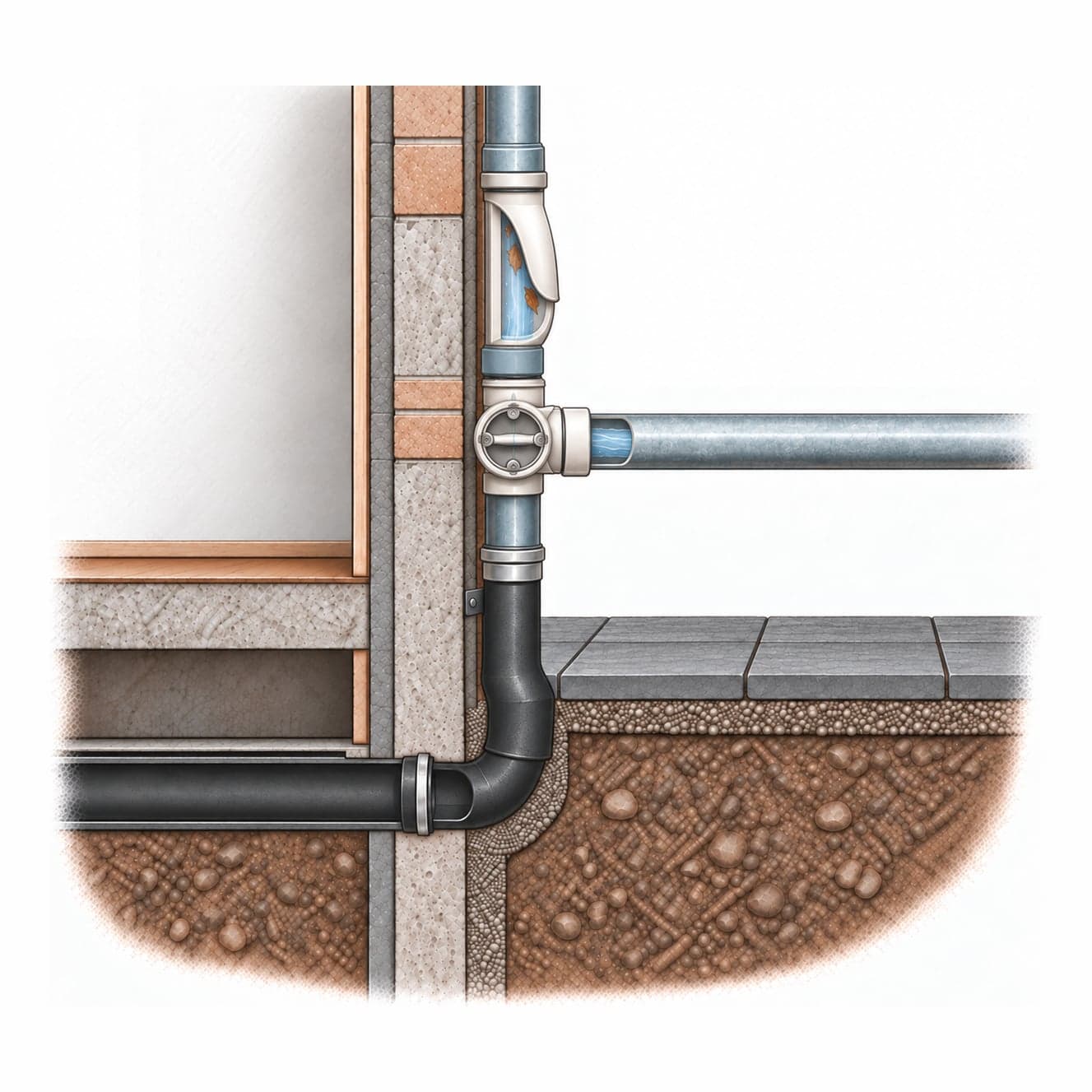
Downspout Diversion
Redirect roof downspouts away from the sewer system toward permeable yard areas, planters, or a rain barrel.
Complexity: Low · 1–4 weeks
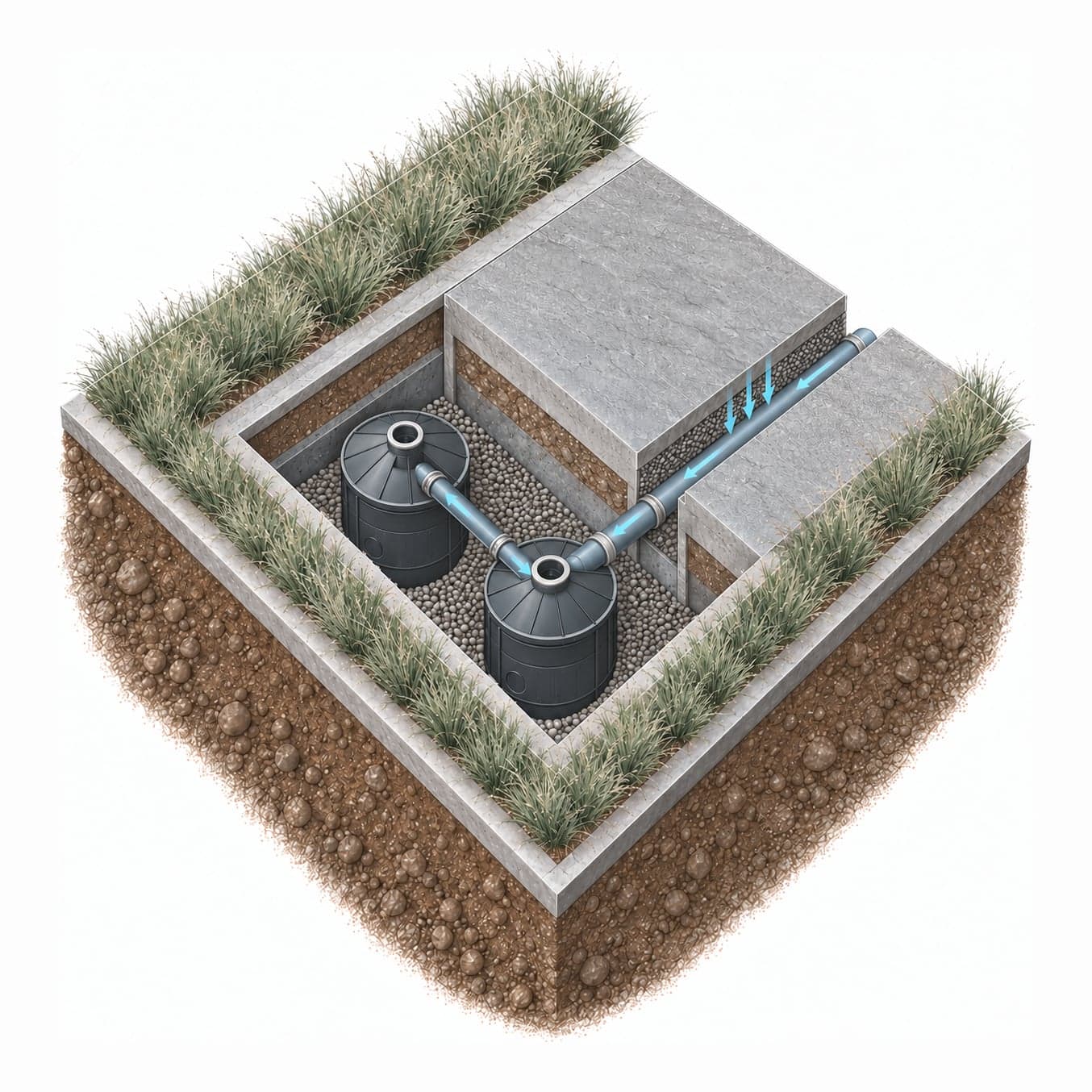
Modular Drywell System
An NDS Flo-Well modular drywell system lets water soak into the ground on-site.
Complexity: Moderate · 1–3 weeks
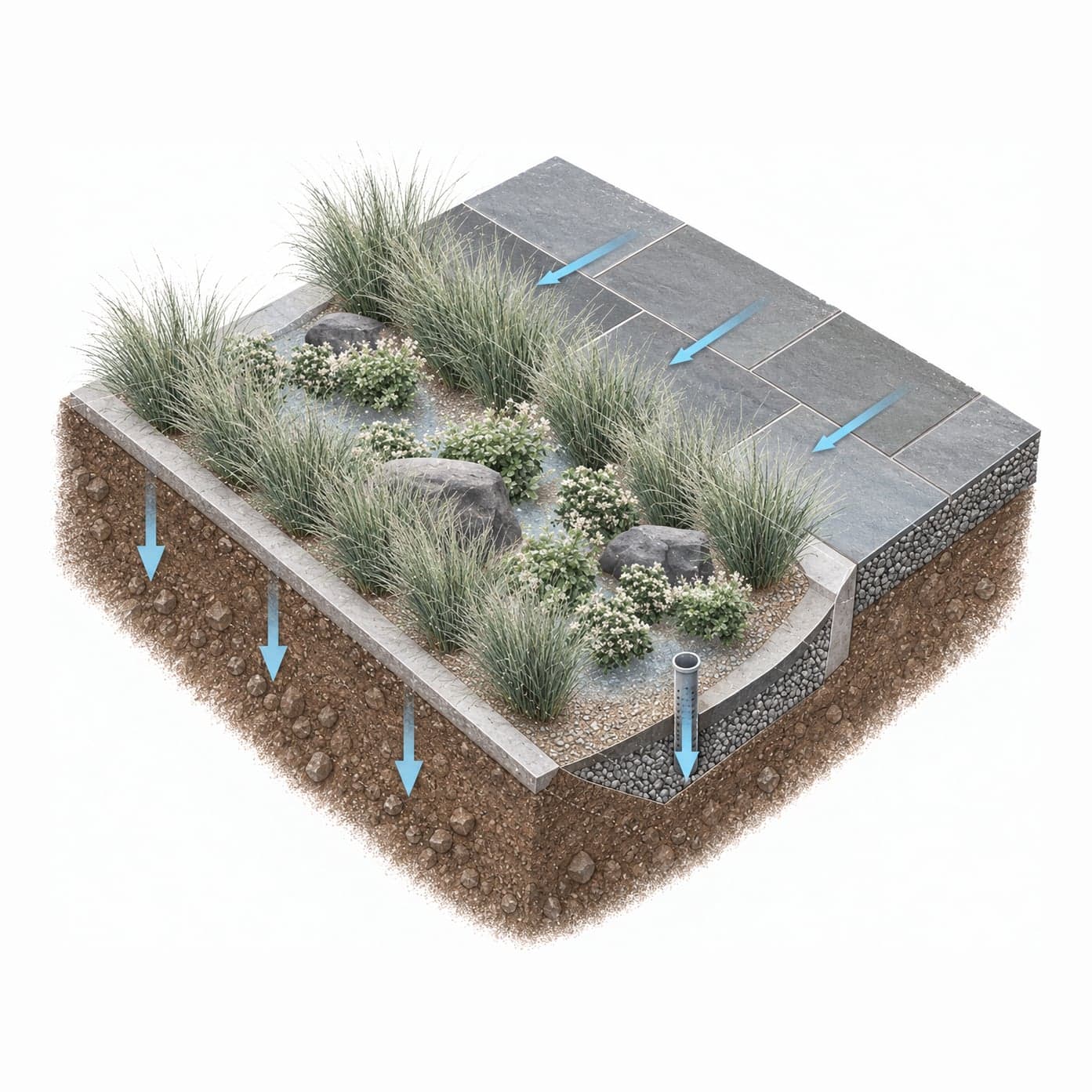
Rain Garden
A shallow planted depression that collects runoff from roofs and paved areas and lets it soak into the ground over a day or two.
Complexity: Low · 1–3 weeks
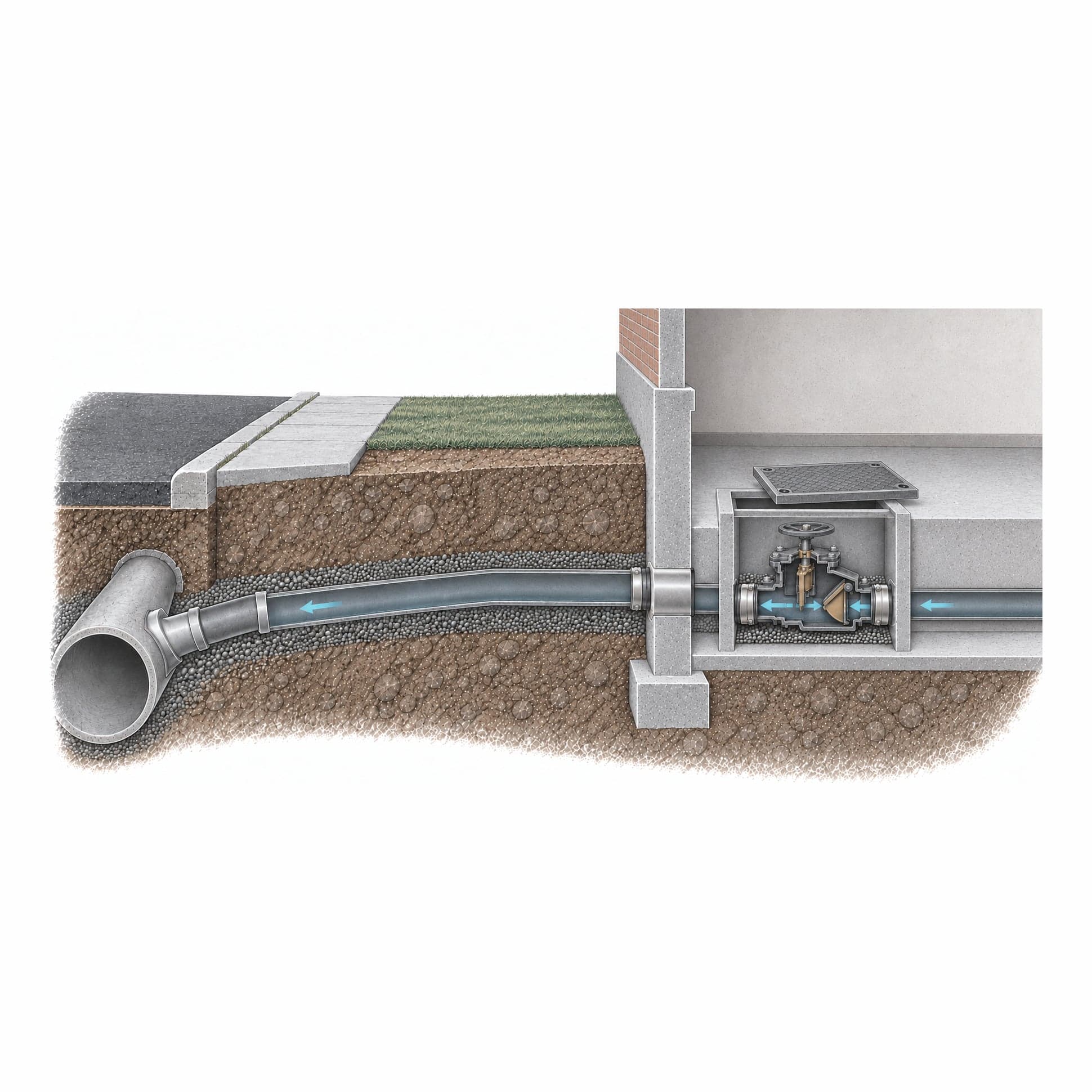
Backflow Preventer + Gate Valve
A backflow preventer on the building sewer lets wastewater flow out to the street but closes automatically when the municipal sewer surcharges, preventing sewage from backing up into the basement.
Complexity: Moderate · 2–6 weeks
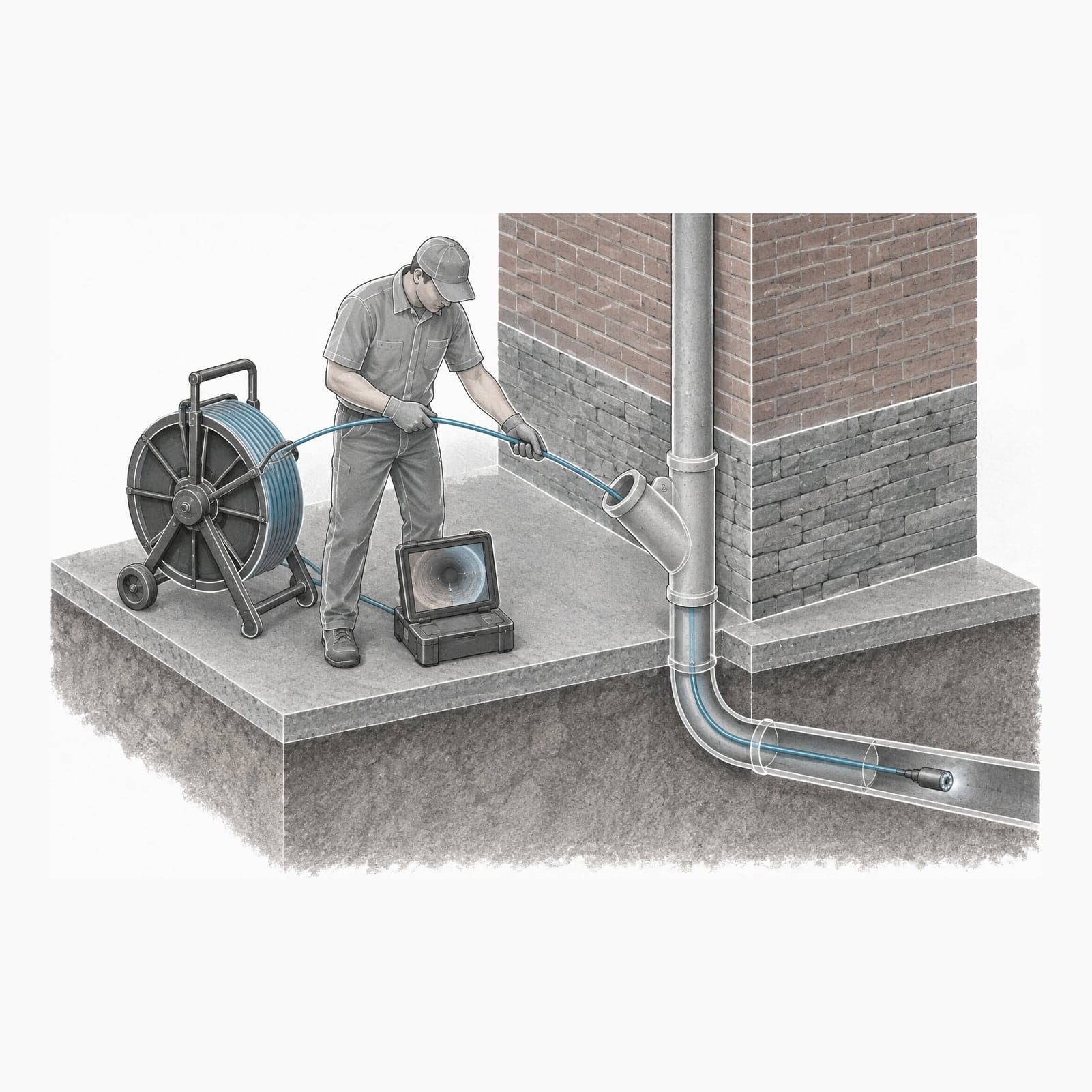
Sewer Line Video Inspection
A licensed plumber runs a camera through the building sewer from a cleanout to the street connection, recording the condition of the pipe.
Complexity: Low · 1–2 weeks
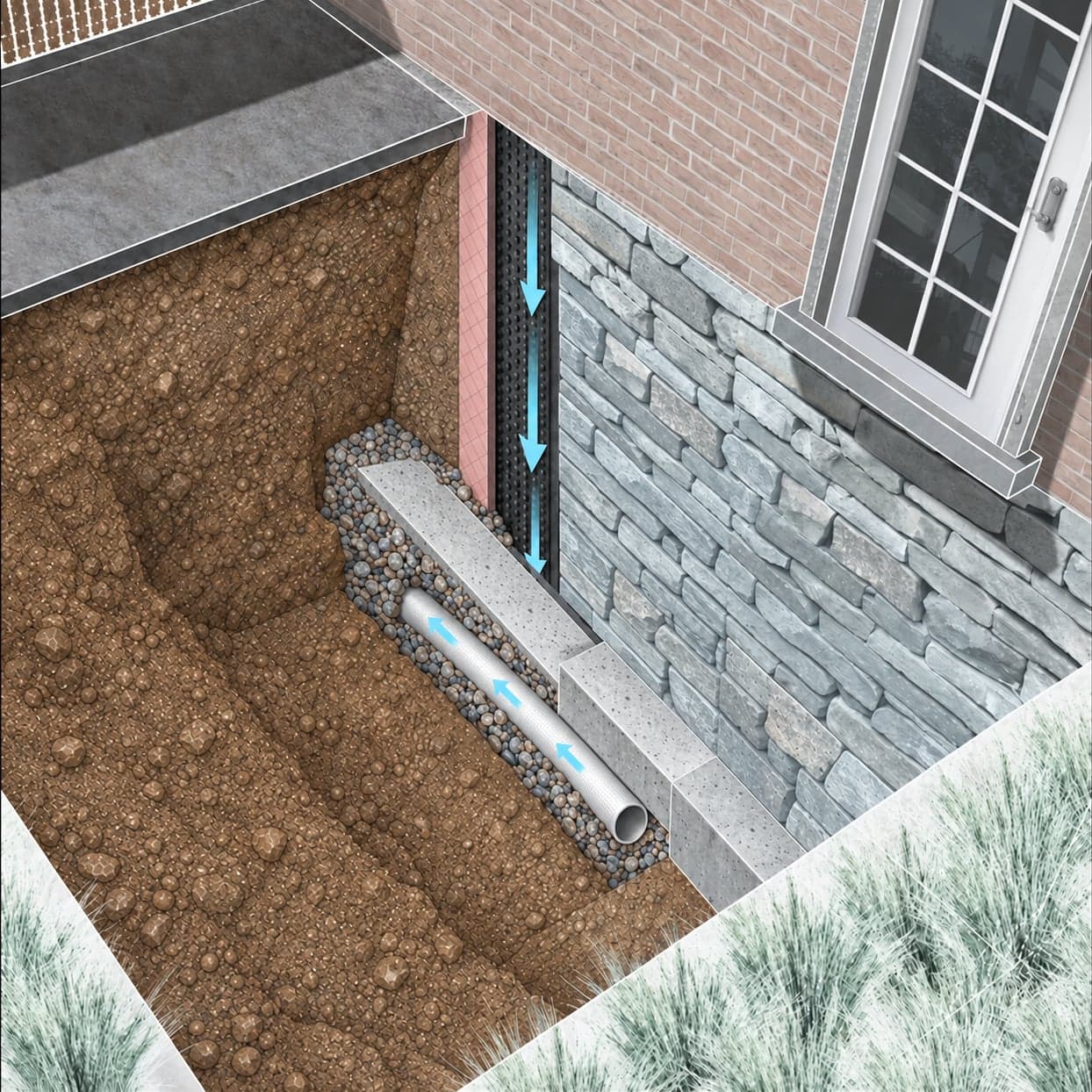
Foundation Waterproofing
Exterior membrane waterproofing, interior footing drains, or crystalline waterproofing compounds address hydrostatic pressure against the foundation, depending on construction type.
Complexity: High · 3–6 months
Which of these fit your lot?
Your Flood Form rates your property’s exposure and recommends the measures suited to it.
Free. Takes about 60 seconds.
Questions about flooding in Whitestone & College Point (East River & Long Island Sound)
What does it mean that Whitestone & College Point has separate storm sewers?
This part of Whitestone & College Point, Queens is served by a separate storm sewer system, which NYC DEP calls an MS4. Catch basins and roof drains carry rain in their own pipes straight to the East River and Long Island Sound, while wastewater flows in another pipe to a treatment plant. Because rain doesn't share a pipe with sewage here, a storm is less likely to push sewage back into basements than in combined-sewer neighborhoods, though a blocked or undersized house sewer line can still back up. Flooding here mostly comes from runoff the storm drains can't take in fast enough, and from groundwater and tides.
How exposed to flooding is Whitestone & College Point (East River & Long Island Sound)?
The most widespread exposure in Whitestone & College Point is stormwater: Flood Form rates 25% of properties Moderate or High for it. The share is 16% for sewer backup, 15% for groundwater and 10% for coastal flooding. These figures describe the whole area, and exposure varies lot by lot within it.
Can properties in Whitestone & College Point (East River & Long Island Sound) manage stormwater on site?
93% of lots in Whitestone & College Point have yard area that legally qualifies for on-site infiltration, such as a drywell or rain garden. A lot without that room can still hold runoff with a detention tank or a blue roof.
Why does runoff from Whitestone & College Point matter for the East River and Long Island Sound?
Storm sewers here discharge runoff without treatment, so what washes off streets, roofs and yards ends up in the East River and Long Island Sound. NYC DEP lists floatables as a pollutant of concern in these waters under its MS4 stormwater permit. Holding roof runoff on site with a rain garden, drywell, or detention tank cuts flooding on the property and what reaches the water.
How do I check one property in Whitestone & College Point (East River & Long Island Sound)?
Enter the address on this page to get its free Flood Form. The report rates that property for stormwater, sewer backup, groundwater, and coastal flooding, and recommends measures suited to the lot.
Nearby separate storm sewer areas
- Flushing Bay & CreekCollege Point & Flushing1,104 properties · 32% with Moderate or High stormwater exposure
- Little Neck BayBayside & Little Neck6,801 properties · 24% with Moderate or High stormwater exposure
- Long Island Sound & Eastchester BayPelham Bay & City Island2,071 properties · 33% with Moderate or High stormwater exposure
- Bergen BasinSt. Albans & South Jamaica41,298 properties · 44% with Moderate or High stormwater exposure
- Newtown CreekMaspeth & East Williamsburg579 properties · 53% with Moderate or High stormwater exposure
- Shellbank & Hawtree BasinsHoward Beach5,067 properties · 52% with Moderate or High stormwater exposure