
Flood Prevention Solutions
Flood Form doesn’t stop at telling you how exposed your property is. Every assessment identifies the measures that will prevent flooding on your lot, such as downspout diversion, yard drains, on-site infiltration, waterproofing, and backflow preventers. Then we give you a plan to get them built.
Get My Flood FormFrom assessment to prevention
Step 1
Assess
Your free Flood Form rates your property's stormwater, sewer backup, groundwater, and coastal flood exposure.
Step 2
Plan
Flood Form Strategy turns that assessment into a prioritized prevention plan with contractor-ready specifications.
Step 3
Build
Vetted contractors bid on the plan, and your Job Folder tracks the work from bid to completion.
Sewer backup
Sewage or stormwater coming up through floor drains, toilets, or sinks when the street sewer overloads in heavy rain.
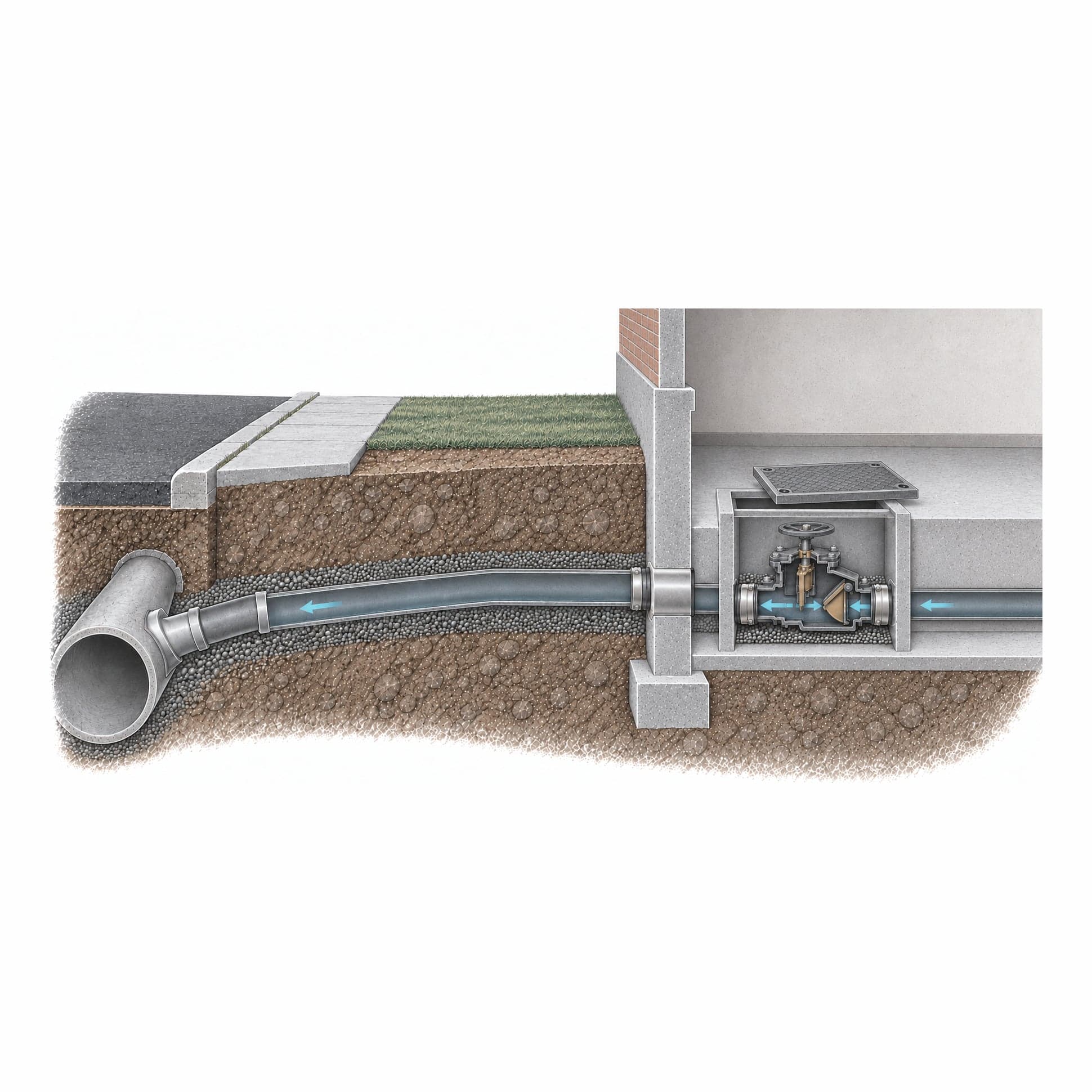
Backflow Preventer + Gate Valve
A backflow preventer on the building sewer lets wastewater flow out to the street but closes automatically when the municipal sewer surcharges, preventing sewage from backing up into the basement.
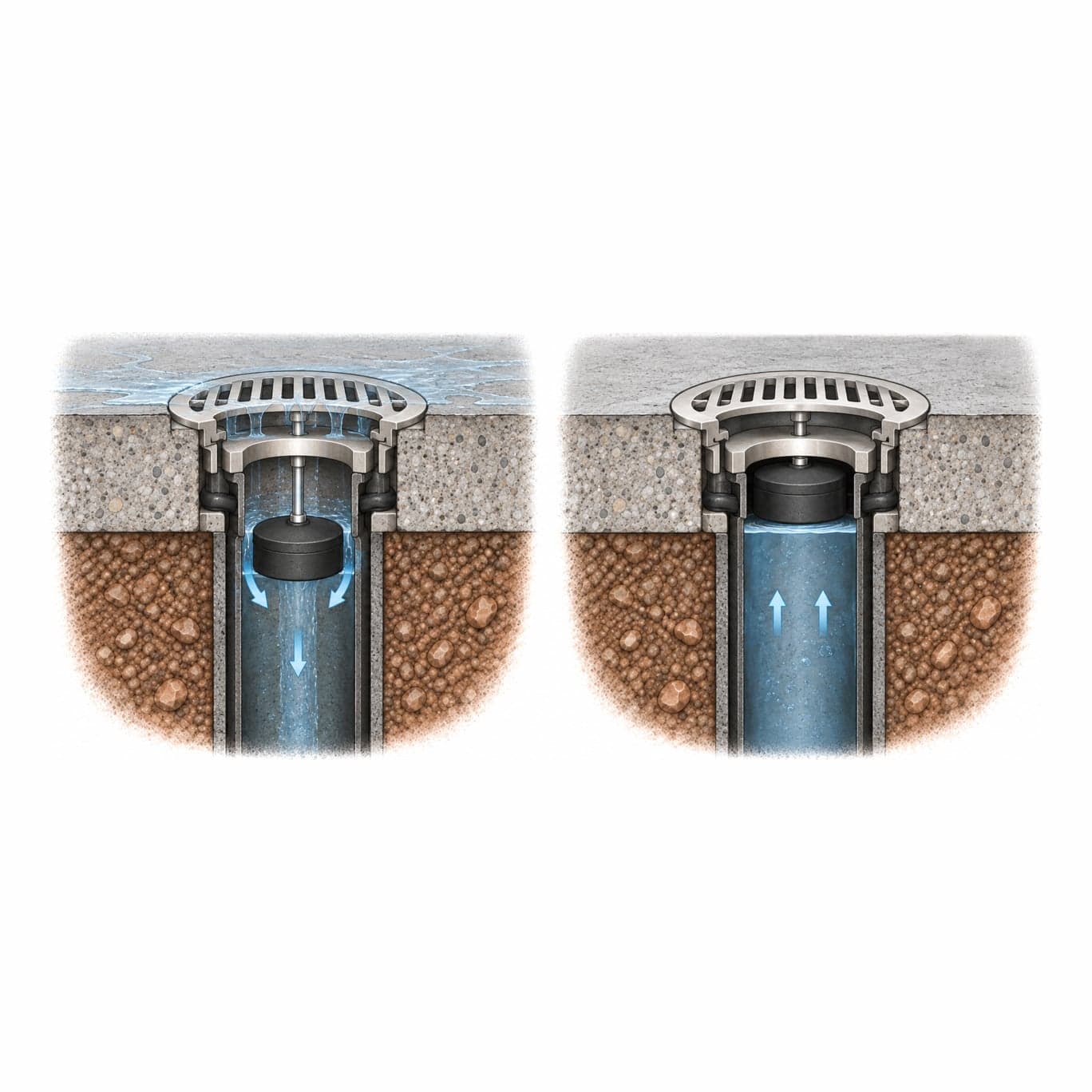
Drain Flood Protector
A float-type flood protector installed in a basement floor drain lets normal drainage pass, but the float rises and seals the drain when the sewer surcharges, stopping backup from entering through the floor.
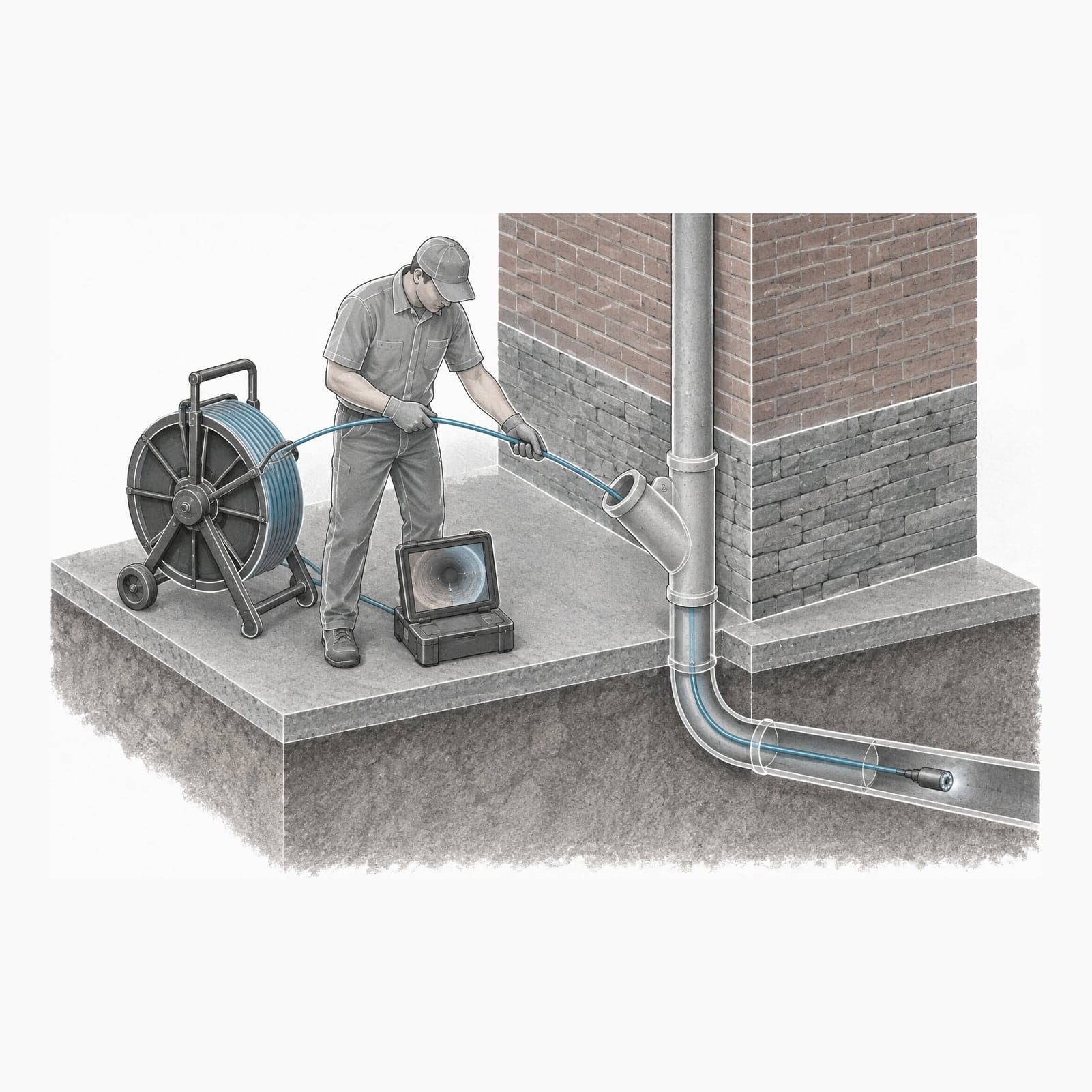
Sewer Line Video Inspection
A licensed plumber runs a camera through the building sewer from a cleanout to the street connection, recording the condition of the pipe.
Basement seepage
Water seeping through basement walls or floors, often from high groundwater or runoff pooling against the foundation.
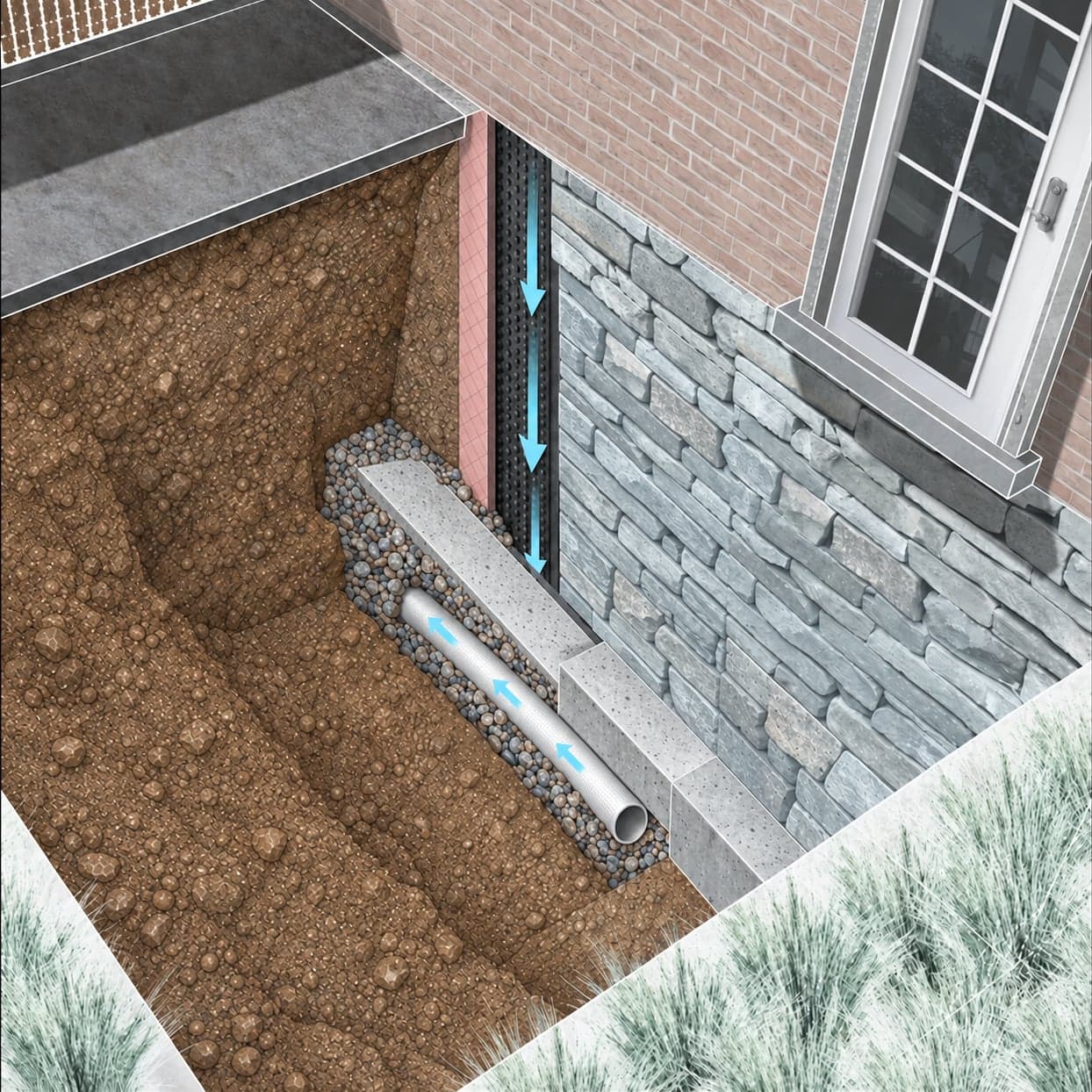
Foundation Waterproofing
Exterior membrane waterproofing, interior footing drains, or crystalline waterproofing compounds address hydrostatic pressure against the foundation, depending on construction type.
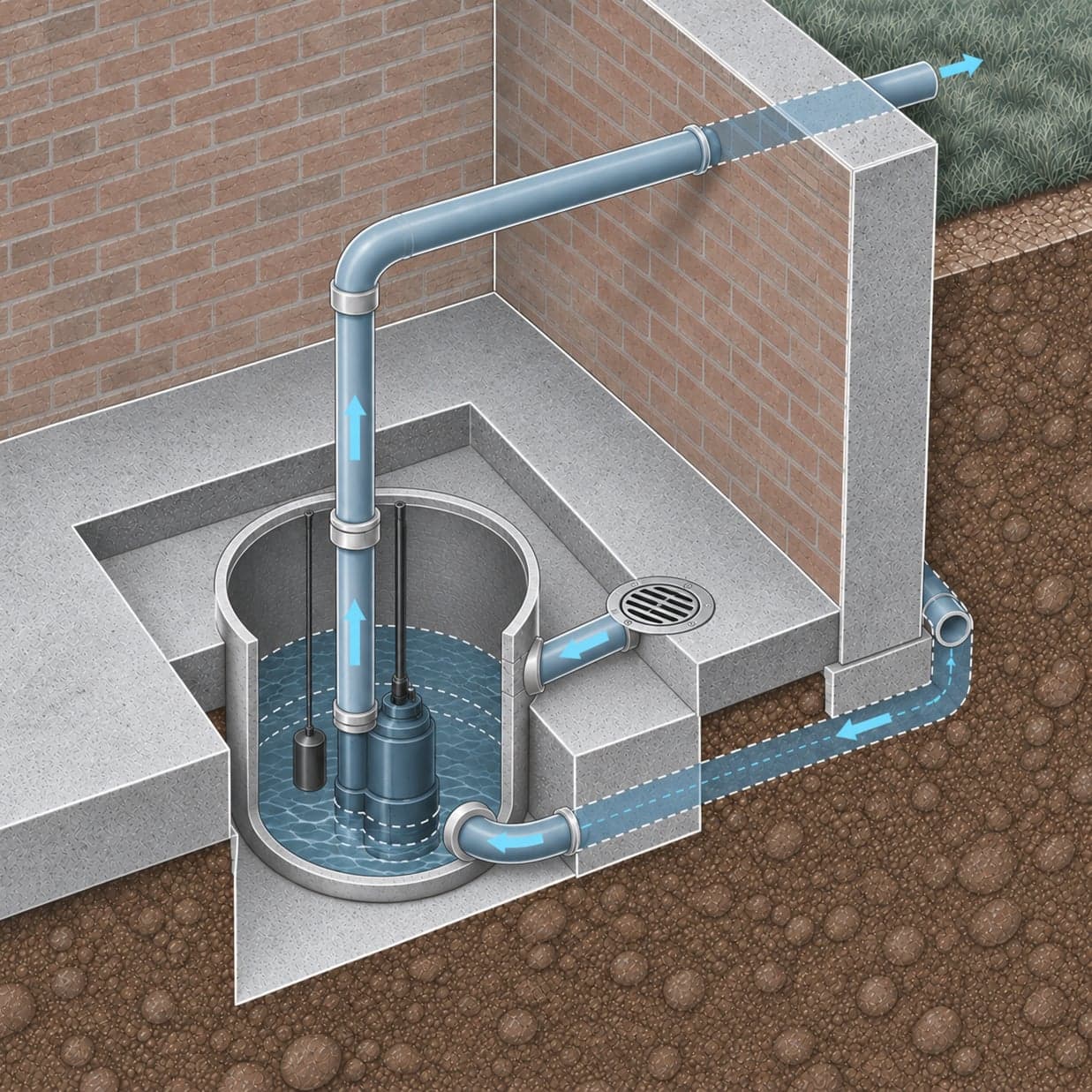
Sump Pump
A sump pump with battery backup actively removes water that accumulates in below-grade spaces during groundwater rise or sewer surcharge events.
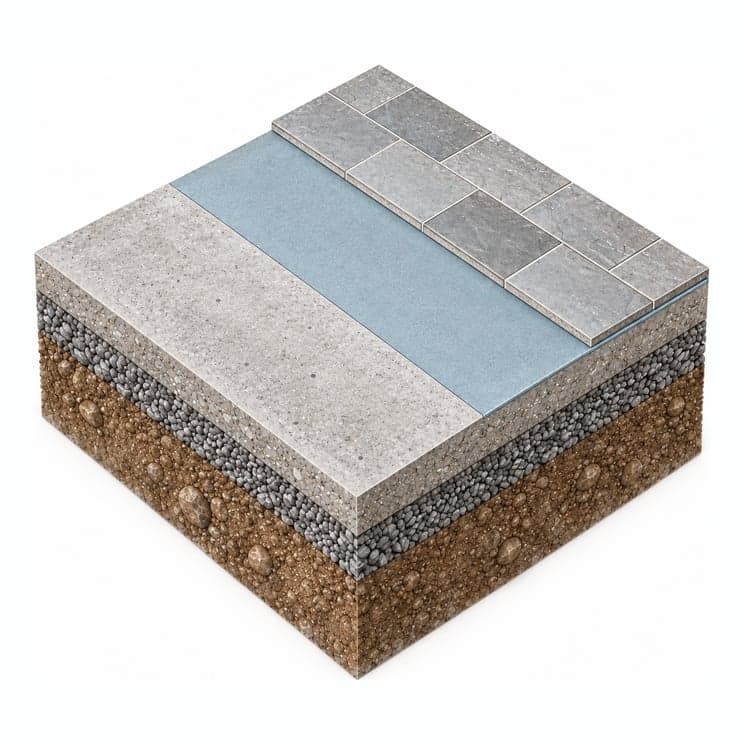
Surface Waterproofing
A concrete skirt pitched away from the building, starting at the building edge and extending 3–6 feet, directs surface water away from the foundation before it can infiltrate at the wall line.
Yard and roof runoff
Rainwater ponding in the yard, overflowing gutters, or running toward the house instead of away from it.
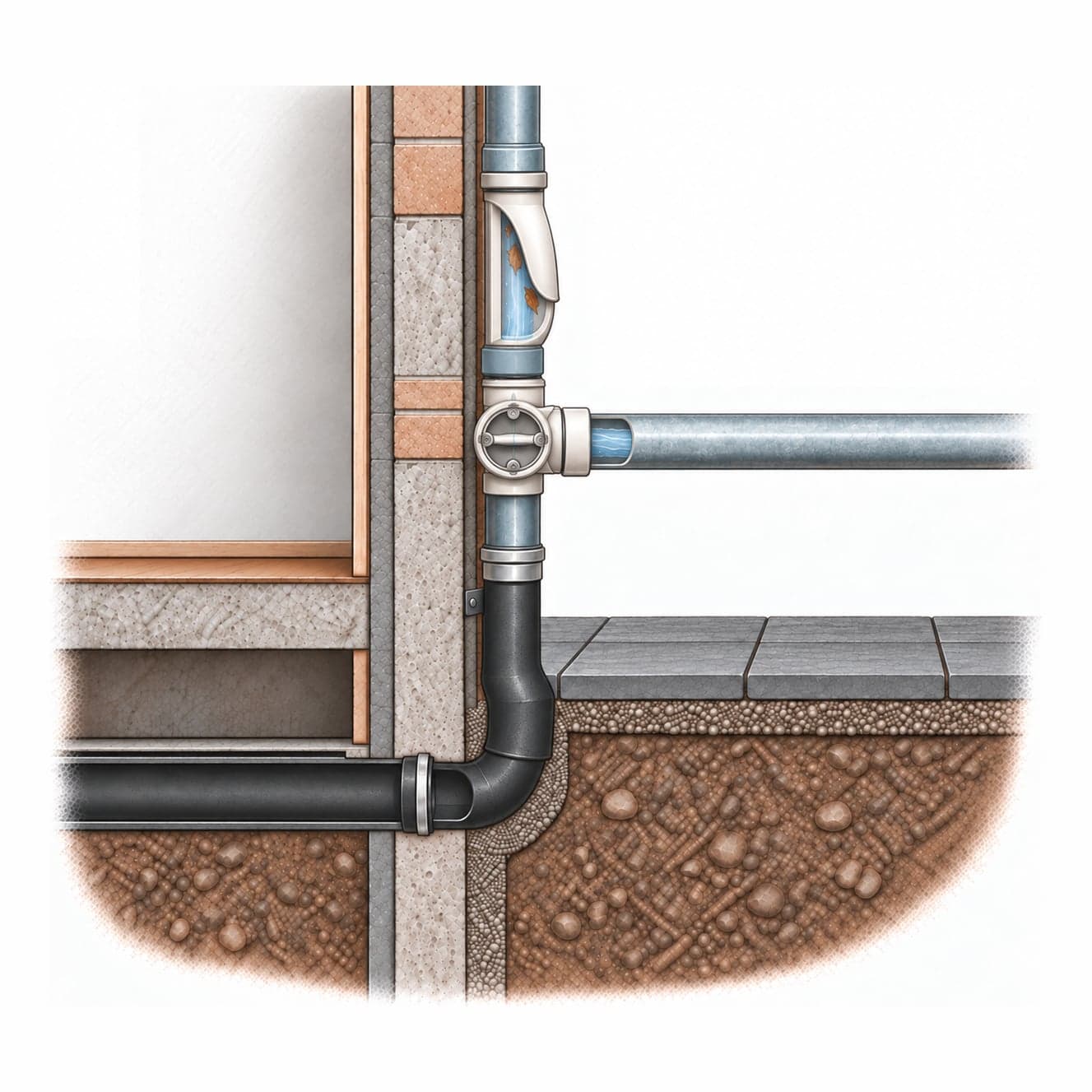
Downspout Diversion
Redirect roof downspouts away from the sewer system toward permeable yard areas, planters, or a rain barrel.
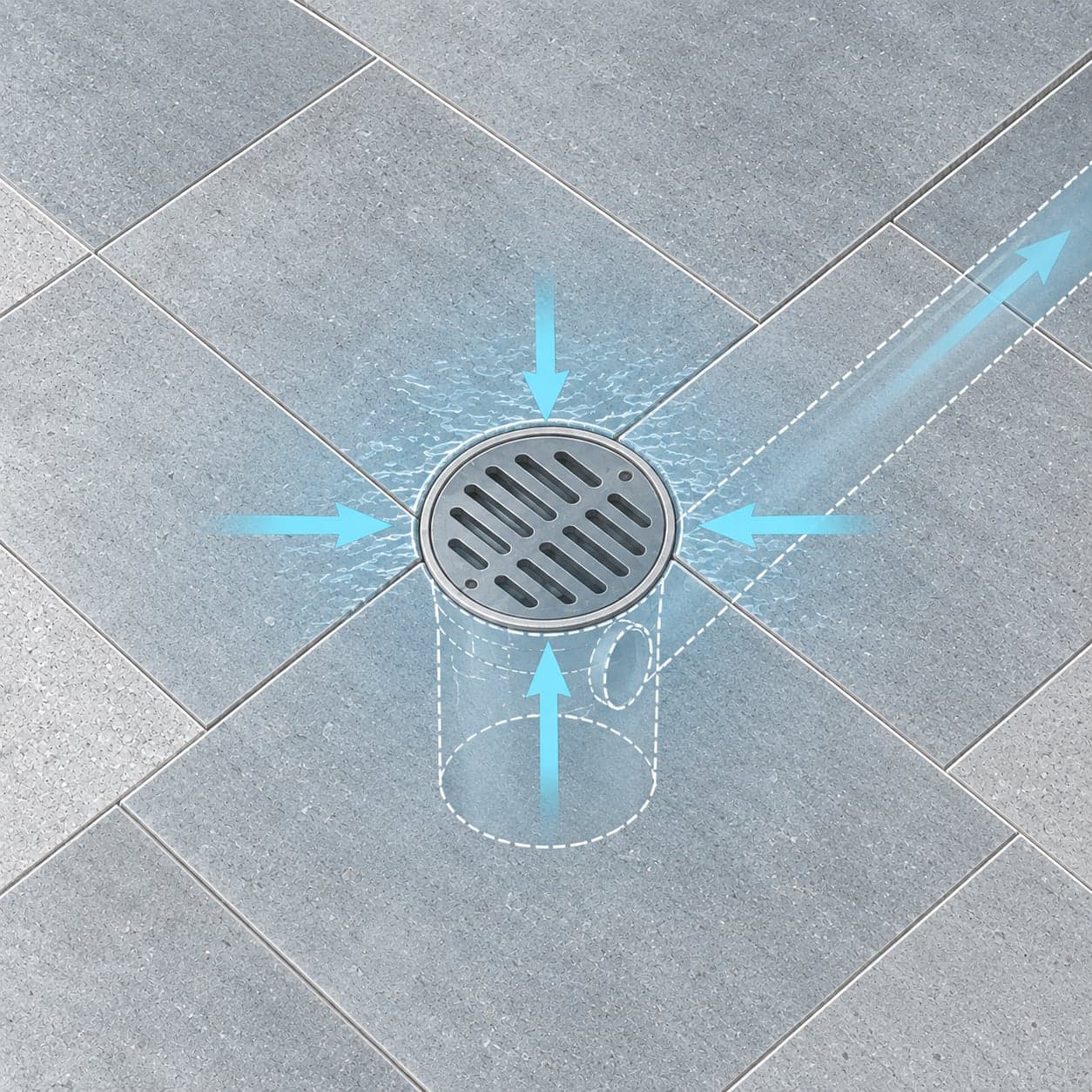
Area Drain
A yard area drain — a surface inlet at the lowest point in the yard — provides a direct outlet for stormwater that pools on the site.
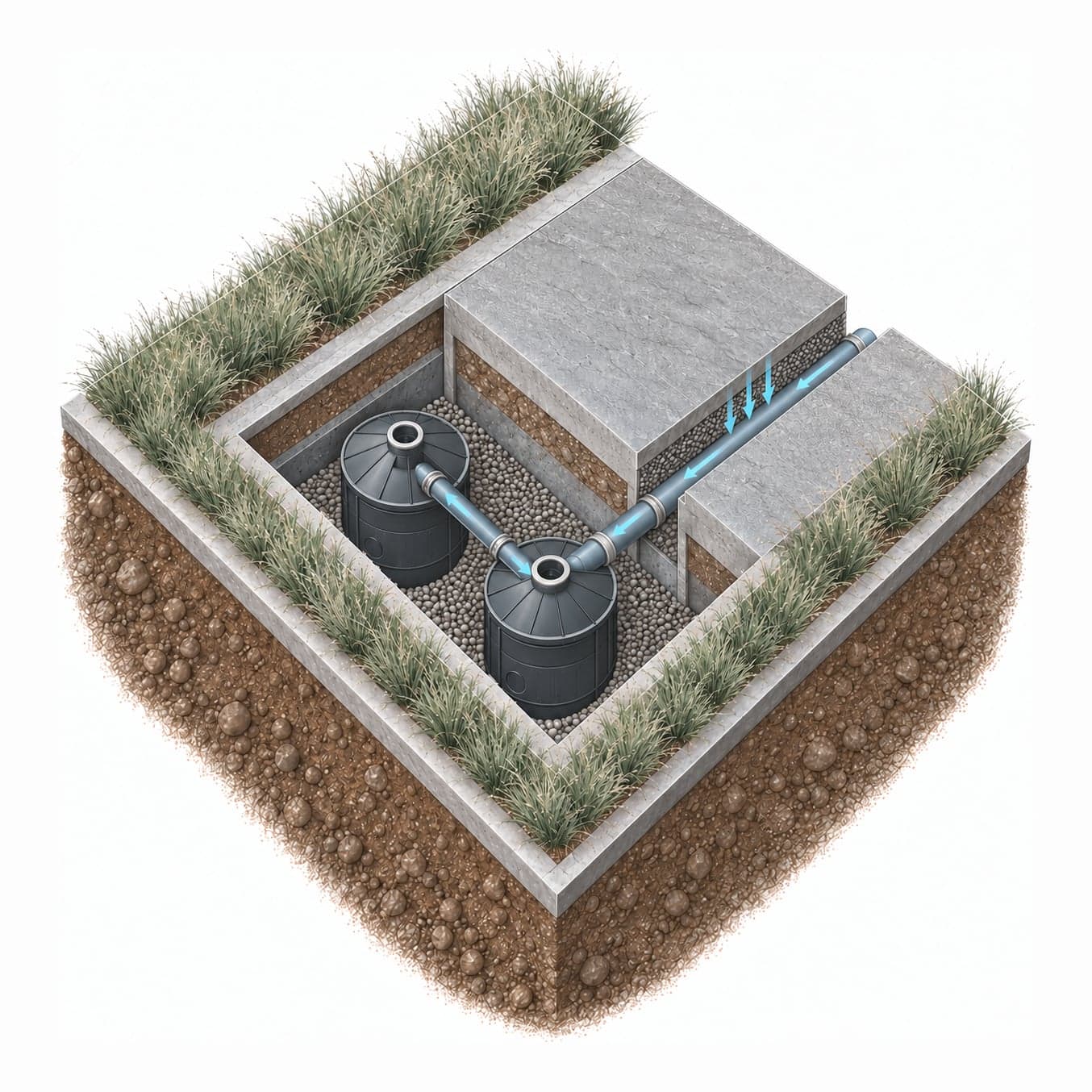
Modular Drywell System
An NDS Flo-Well modular drywell system lets water soak into the ground on-site.
Water at doors and windows
Street or coastal flooding reaching below-grade doors, stairwells, and basement windows.
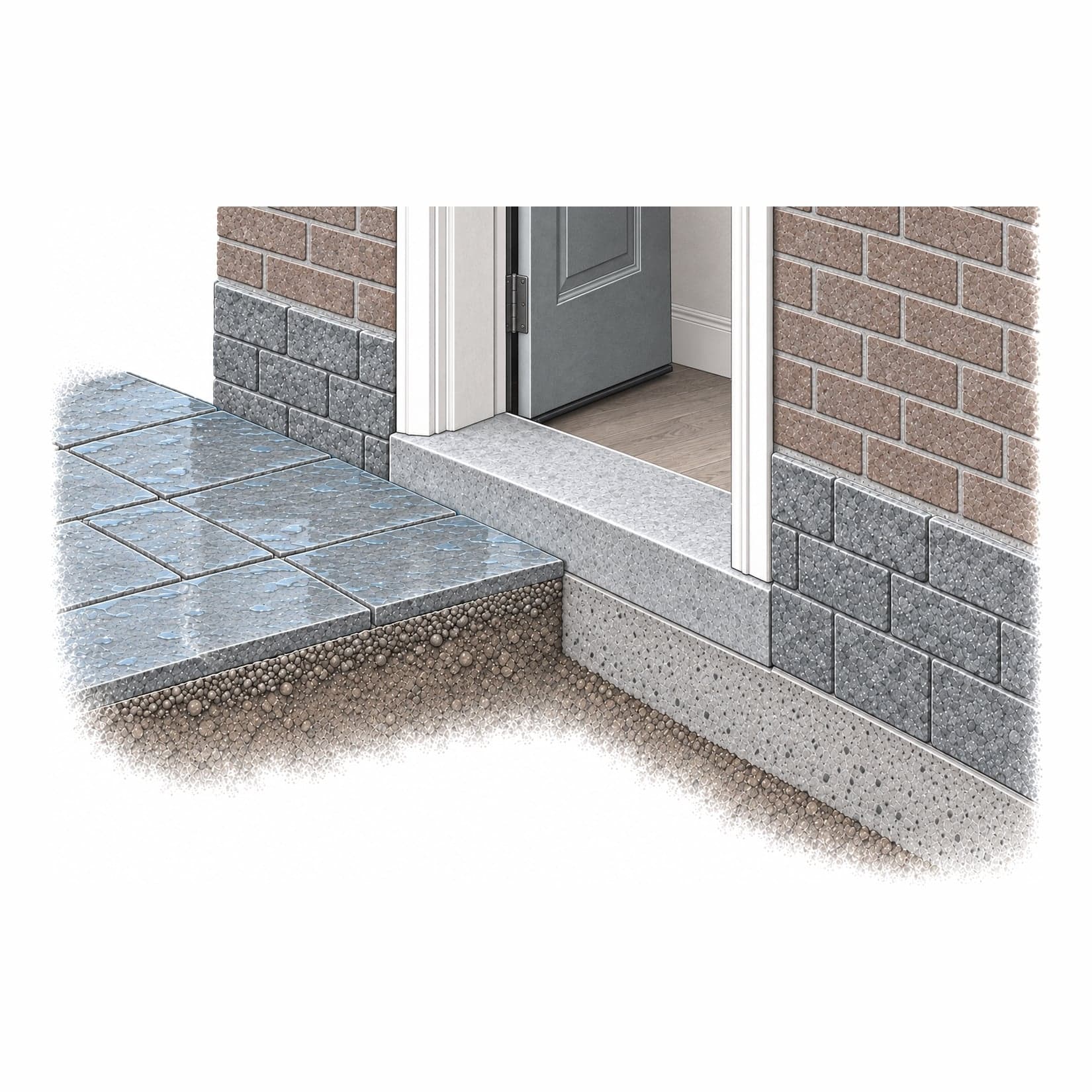
Raised Threshold
Raising a doorway threshold with a concrete step or raised sill keeps shallow surface water from entering at ground-level and below-grade doors.
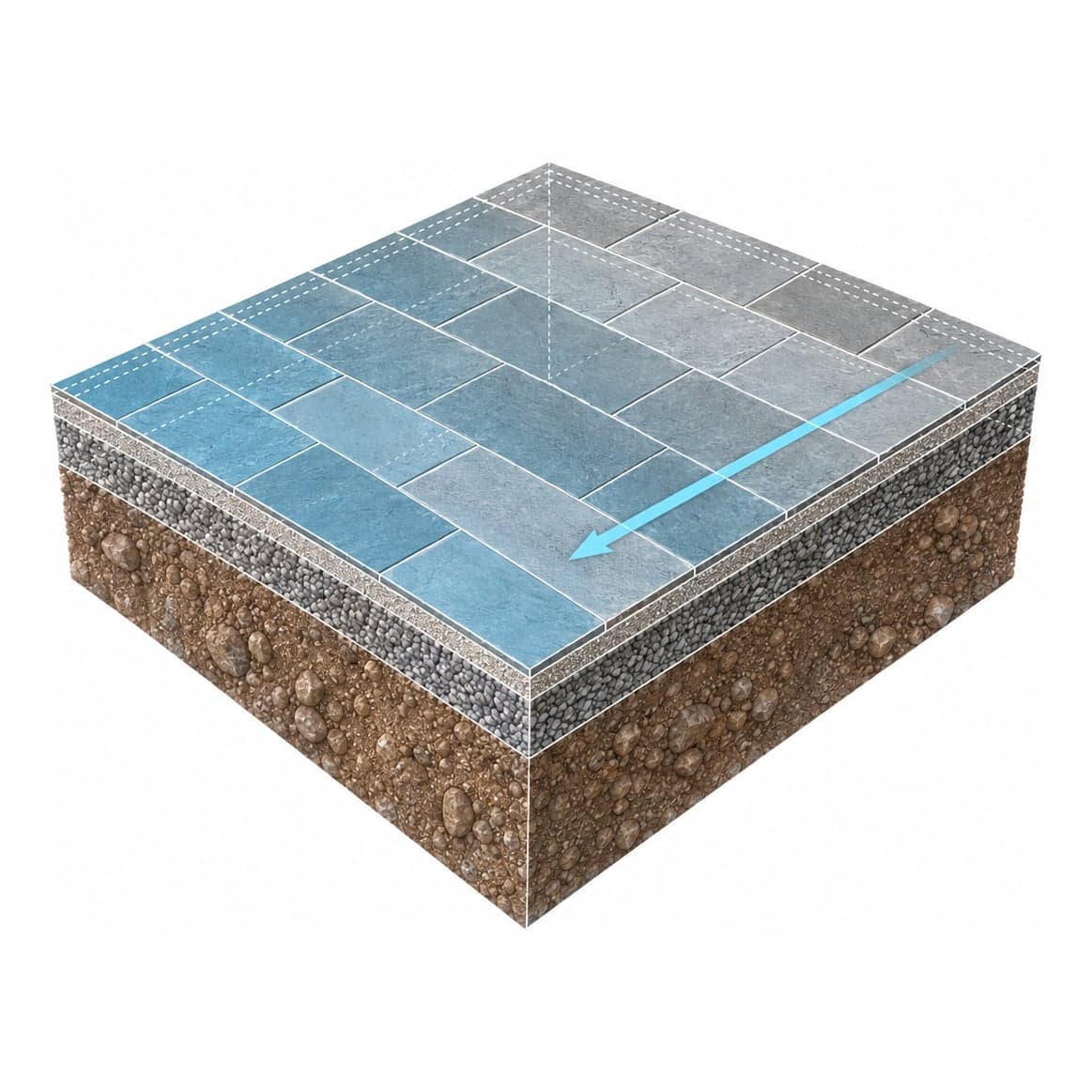
Regrading
Surface grading that pitches toward the building allows water to accumulate at the foundation.
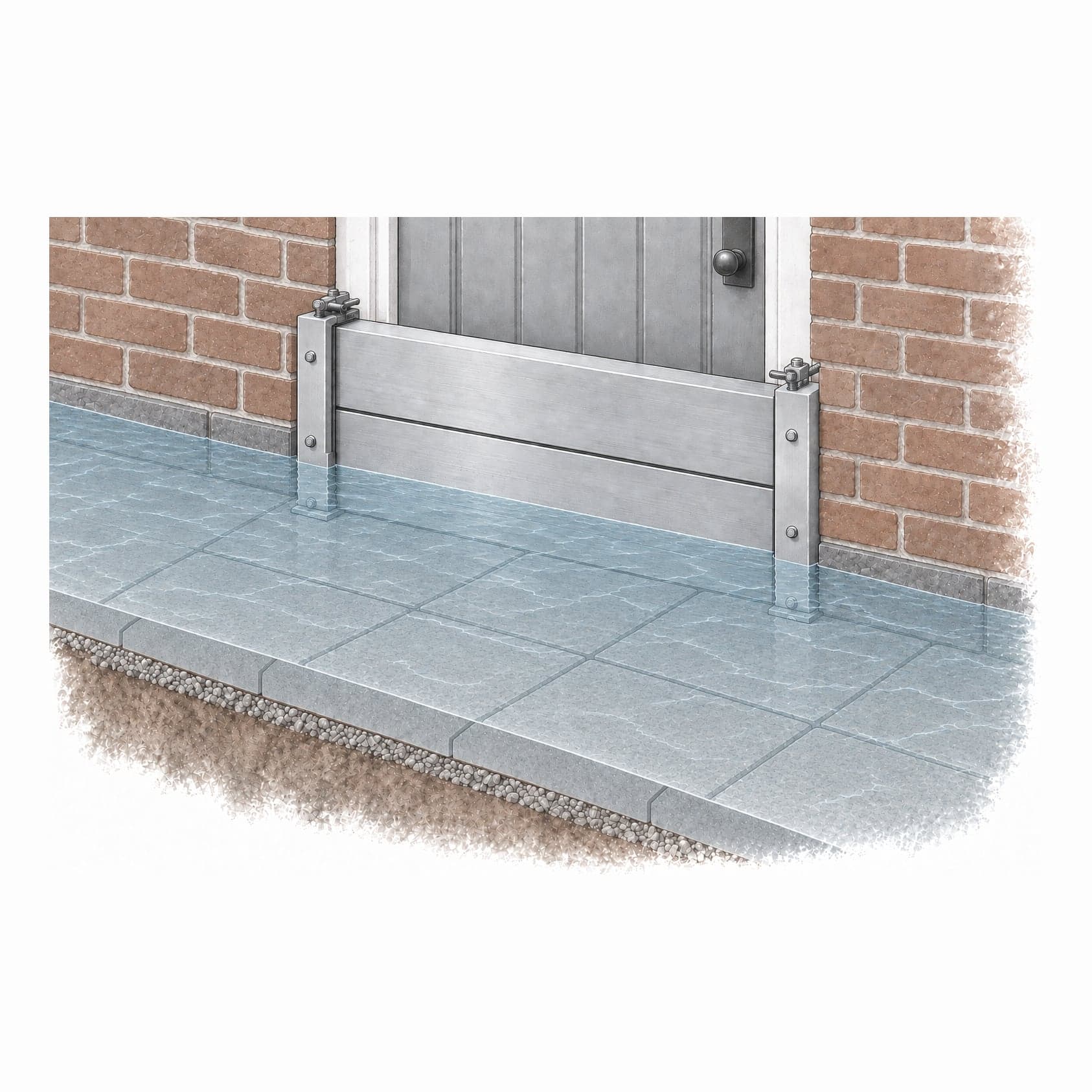
Residential Flood Barrier
Deployable flood-barrier panels drop into permanently mounted side channels at a doorway or areaway opening, sealing it against surface floodwater.
Which of these fit your lot?
These are the most common fixes. Your free Flood Form assesses your property’s flood exposure and recommends the prevention measures suited to it, from a wider set of solutions.
Free. Takes about 60 seconds.