The Five-Inch Storm Garden
A property in Greenpoint gets a major drainage upgrade.
We're calling this Greenpoint project the Five-Inch Storm Garden because it has the capacity to manage, on site, the stormwater from a cloudburst that drops five inches of rain in an hour — an event that has not (yet!) happened in New York.
GARDEN PROFILE
510
Square Feet
Building Footprint
688
Square Feet
Lot Impervious Surface
954
Gallons Managed
Per Three-Inch Storm
7
Feet
Distance to Groundwater
NOTE
The short distance to groundwater is a unique condition of the property — even with a good infiltration rate i.e. well-drained soil, the presence of a high watertable has the potential to affect drainage during a storm, as rising groundwater can affect the soil's ability to absorb surface runoff. With such high groundwater, seepage into below-grade spaces is also a serious consideration.
THE STRATEGY
On sites like this one, with moderately-well to well-drained soil, drainage strategies often focus primarily on capturing and holding water long enough for it to seep naturally back into the ground. This is because the rate at which the rain falls and runs off, more than the sheer volume of stormwater, is what overwhelms city systems, causing flooding and sewer backup.
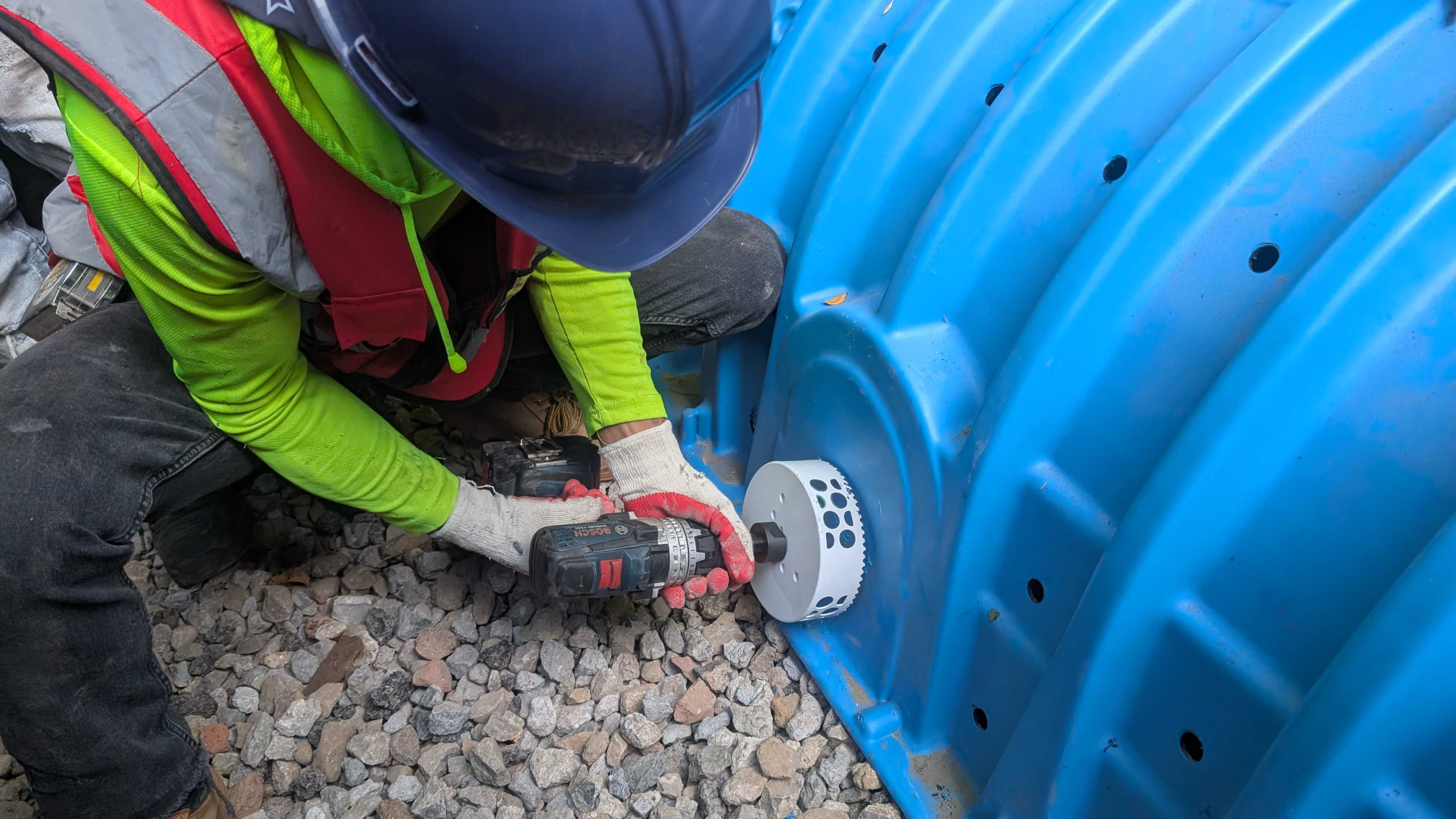
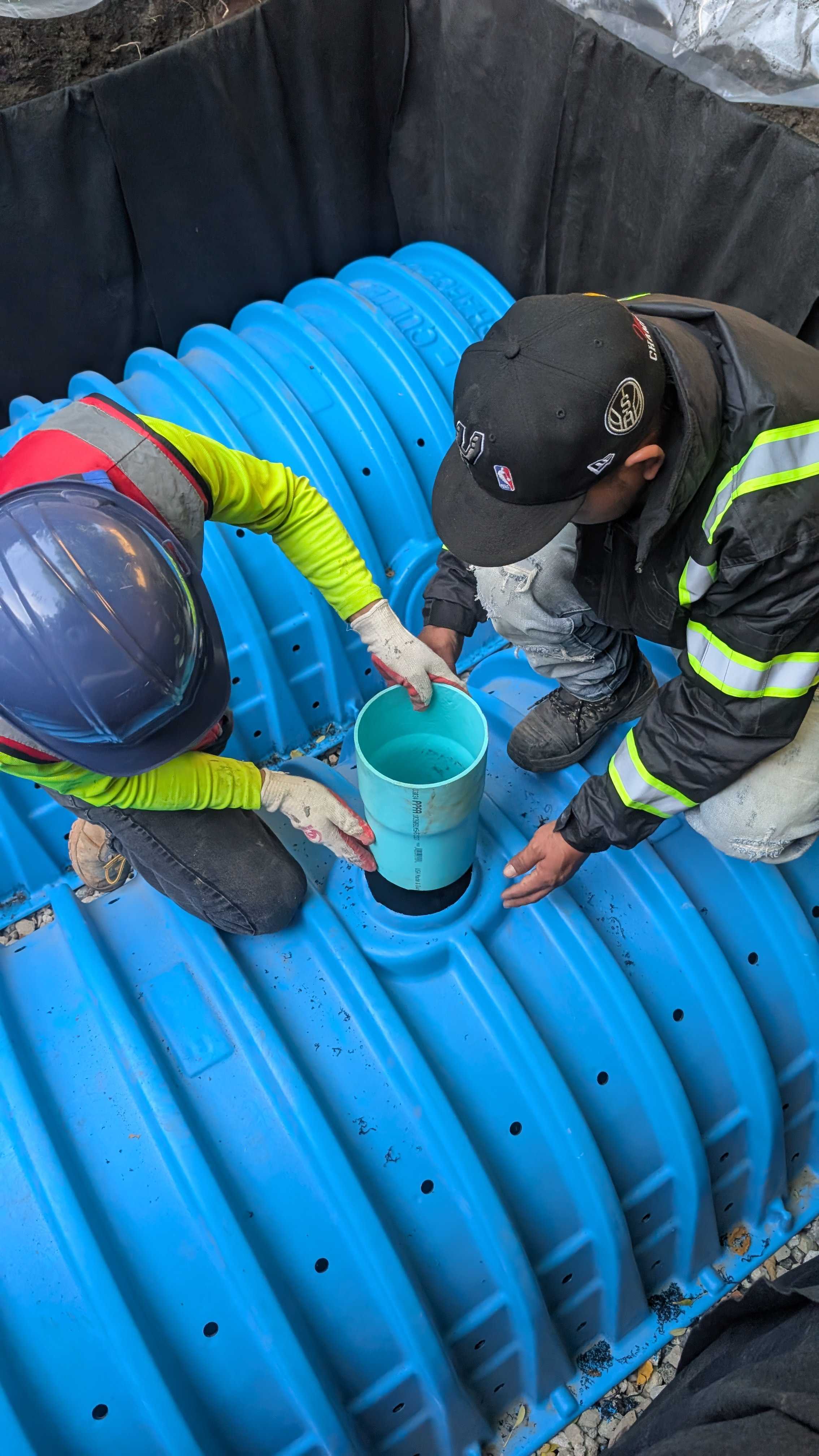
In that spirit, this ambitious retrofit features four stormchambers — two Cultec 280s and two Cultec 180s — installed in series in the back yard, as well as a drywell column in the front yard, for a total static capacity of more than 2,200 gallons.
Both the stormchambers and the drywell column are bottomless; open containers, installed in substantial gravel pits, intended to capture massive amounts of water and allow it to percolate continuously back into the ground below.
THE NEIGHBORHOOD
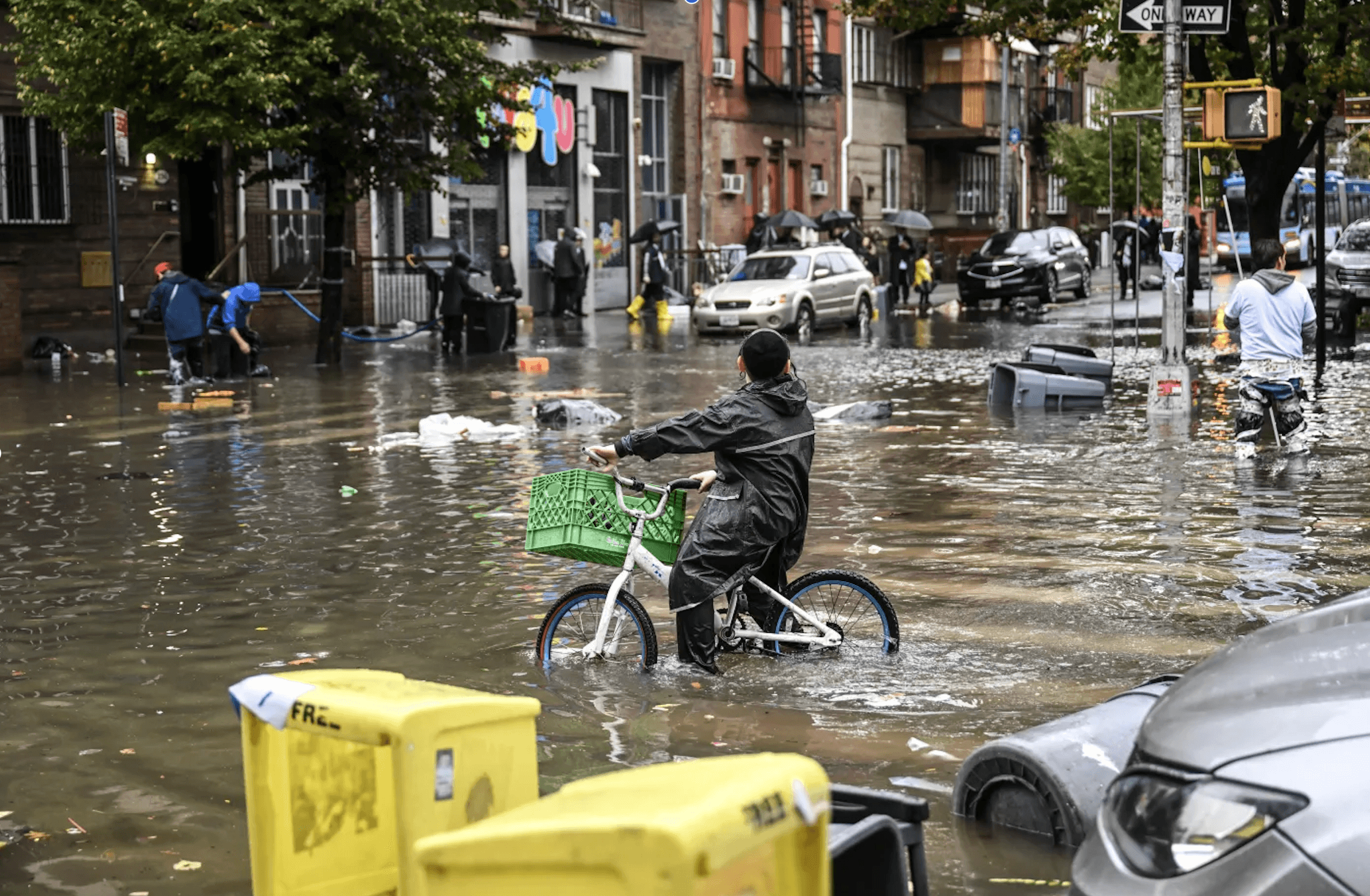
This portion of Greenpoint, Brooklyn, comprises 910 properties that share the NCB-004 combined sewer. When the neighborhood experiences moderate to heavy rainfall, stormwater runoff can exceed pipe capacity faster than it drains, putting pressure on the NCB-004 combined sewer overflow and creating increased exposure to sewer backup block by block.
One interesting thing to note is that the neighborhood is older than 90% of NYC's combined sewer areas, with a median construction year of 1901 (!) meaning many buildings have aging drains and sewer connections.
Click below for a (much) closer look at NCB-004 — including a video tour of a notoriously flood-prone street corner led by Flood Form Founder Sam Robinson.